
Elena RS, Marcin C, Cristina OC, Alicia EL, Carmen RM, Joanna P, Rosa EZ. Effects of a controlled diaphragmatic breathing session on perceived pain and state anxiety in people with chronic pain. Current Psychology. 2024. 43: 31650-31660. https://doi.org/10.1007/s12144-024-06745-4
Abstracted by:
Mbachu Obinna C, PT, DPT Abilene, Texas – Fellowship Candidate, IAOM-US Fellowship Program & Jean-Michel Brismée PT ScD, Fellowship Director, IAOM-US Fellowship program.
Research:
There is a plethora of research suggesting the synchronous influence of anxiety on pain and vice versa. Research also highlights that individuals with anxiety have increased number of pain sites, number of days with pain and pain intensity1 2. The research further introduced the concept of diaphragmatic breathing and its influence on the sympathetic system through vagus and glossopharyngeal nerve stimulation. It was illustrated that slow deep breathing caused phasic stimulation of the baroreceptors of the carotid arch and pulmonary stretch receptors leading to alteration of blood pressure at a reduced rate3. Impulses would in turn stimulate the solitary tract of the brainstem via the vagus and glossopharyngeal nerve causing a reduction in the sympathetic system and modulation of perceived pain through projection into the pain modulatory circuit from the solitary nucleus. Research also elaborated on the influence of attentional mechanism on slow deep breathing to produce changes in pain and anxiety2. There was further discussion on the theory of “resonance frequency” which is respiration rate of 6 breaths per min against the normal adult respiration rate (RR) of 12-18 breaths per minute and its effects on achieving sympathetic changes by autonomic modulation4. Stated in this research was also the influence in the inspiration/expiration (I/E) ratio where shorter inspiration to expiration ratio produced higher cardiac vagal activity. The objective of this research was to investigate
- the effects of a single session diaphragmatic breathing exercise on pain intensity and anxiety.
- if the effects of a single session diaphragmatic breathing can be generalized to all respiration ranges
- If the effects of diaphragmatic breathing were due to attentional modulation or autonomic modulation.
Methods:
This study was a single-group pretest/posttest design. Study was carried out in two countries, Spain and Poland. 170 people with chronic pain were recruited by a virtual snowballing sampling technique through various social networks (such as Facebook, Twitter, or Instagram). 37.6% of participants were Spanish while 62.4% were Polish. Inclusion criteria were being 18 years and older, the experience and persistence of pain for at least 3 months. Exclusion criteria were lack of persistent pain during the last 3 months, an intensity pain score less than 3 points in the past week, presence of any severe mental health illness or chronic or acute respiratory disease. Each participant filled out questionnaires that analyzed their perceived pain, state anxiety and dispositional anxiety. Participants were randomly assigned different I/E ratio and RR. Respiratory range varied from 6-12 breaths/per min and I/E ratio ranged from 30-70% among participants. Participants then received instructions on diaphragmatic breathing session. They observed an online audiovisual presentation of a natural scene showing a flower-head floating up and then down along with ambient gentle breathing sounds that matched the flower movement. Participants were instructed to synchronize the breathing with inhaling when flower was floating upwards and exhale when flower was floating downwards. The audiovisual component matched the RR and I/E assigned to each participant. Participants carried out the task for 10 min. Bias was avoided by having all participants observe the same audiovisual scene. After the completion of this exercise participants were given a questionnaire to determine if they had been able to follow the breathing pattern correctly. Pain was measured using a numerical pain rating scale from 0 “no pain” to 10 “the worst pain imaginable”. Anxiety was assessed prior and after exercises with the Current Anxiety Level Measure. This self-reported outcome comprises 16 items scored on a 5-point Likert-type scale ranging from 0 “not at all” to 4 “extremely” with a minimum score of 0 (no anxiety) and a maximum score of 64 (extremely anxious).
- Had they been able to follow the breathing pattern?
- Had they been concentrating during the task?
- Had they been comfortable during the task?
- Had they been distracted during the task?
- Had they had to change position during the task?
- Did they Regularly practice activities, such as yoga and meditation?
Results:
Total of 169 participants completed the study. Mean age was 29.2+/-12.4 years. Pre-test and post-test pain was a mean of 4.0 and 2.2, respectively. There was a significant reduction of perceived pain > 1.5 points on the numerical pain rating scale following the breathing exercise. There was also significant reduction in anxiety pretest to posttest mean scores of 20.87 to 11.71 following the breathing intervention. 81% of the participants reported being able to follow the breathing pattern. 75.15% had always been concentrating during the task, and 87.60% reported never been distracted during the task. There was significant difference in the pretest/posttest pain between the Spain and Polish participants with Spanish participants being lower. Spain participants reported a greater percentage of attention and less distraction during the exercise.
Conclusion:
A single session controlled diaphragmatic breathing session resulted in decreased perceived pain intensity and reported anxiety in people with chronic pain. Difference was seen among the perceived pain reports between nationalities with the Spanish exceeding the minimum 1-point cut-off on the numerical pain rating scale. There was also no difference in perceived pain threshold among participants of various RR and I/E ratios. Attentional focus and distraction were seen to be a great influence in the reduction of perceived pain during the breathing task.
IAOM-US Comments:
Chronic pain is seen in a confluence of conditions including musculoskeletal pain, fibromyalgia, chronic fatigue syndrome, osteoarthritis etc5 6. Chronic pain can also persist in musculoskeletal conditions because of overload of allostatic stressors (health changes, poor sleep, social isolation, lack of exercise, poor diet and unforeseen changes in environmental demands) leading to dysfunction in the neuro-immuno-endocrine response systems7. Literature has shown the reciprocal influence of chronic pain and anxiety2. This has been explained for different reasons by different authorities. Evidence shows that certain brain centers such as the amygdala and nucleus accumbens are involved in both the modulation of pain and anxiety8. It was also explained by Fabrizio Benedetti in his book the “The Patient’s brain” an abrupt and progressive change in the current, physical, mental and systemic state of the body is deciphered by a patient through the process of interoception. This leads to the process of one “feeling sick”. This process activates the limbic system and causes a significant increase in the state of anxiety9. This falls in the Combined Reward Deficiency Antireward Model that establishes the fact that chronic pain causes anxiety and anxiety in turn intensifies the perception of pain2. This vicious cascade is proven to not only increase pain intensity but also number of days with pain and number of pain sites10. These factors in turn lead to an increase in the sympathetic system by a few processes. Evidence proves that chronic pain is associated with reduced heart rate variability11. Lower heart rate variability activates the sympathetic system and places one in a state of constant fight or flight; hence, heightened anxiety. Also, chronic pain would lead to an increase in the production of cortisol which would further exacerbate the sympathetic system7. Relaxation techniques in the literature have been implored as adjunct means of reducing patient perceived pain and state anxiety through autonomic means that would promote parasympathetic drives. Diaphragmatic breathing is an easy to learn and time efficient exercise in the management of chronic pain. Diaphragmatic breathing practiced among individuals with no respiratory conditions would cause an oscillation in the cardiac rhythm (heart rate and arterial pressure) through stretch of the pulmonary stretch receptors and baroceptors (carotid sinus, aortic arch)12 13 14. This information is transferred to the solitary tract of the brainstem via vagus nerve and glossopharyngeal nerve stimulations15. This would cause a top-down modulation of the heart rate during the inspiration and expiration phases of respiration. This cardiac oscillation would increase cardiac vagal tone, increase heart rate variability and promote parasympathetic drive16. In addition, the solitary tract has projection to the pain modulatory centers of the brain such as the locus coeruleus, which would also decrease state anxiety and pain17. This study has shown that a single session of diaphragmatic breathing exercises practiced for 10 min within RR between 6-12 breaths/per min and a low I/E ratio (shorter inhalation to expiration time)18 would cause significant reduction in state anxiety and perceived pain1. The patients baseline RR should be considered in determining the number of set breaths per minute. It was also evidenced in the literature that attentional control had a significant influence in success of a single session response to pain and state anxiety. Recommendation to patients in engaging in activities that would also improve attentional control such as meditation and Tai-chi is imperative. It is also pertinent to consider that there should be internal or external cues that would guide respiration and I/E ratios. Several apps are available (Prana breath, Mesmerize, Lungy, Breathe+) to enable one practice diaphragmatic breathing and set RR and I/E parameters. These apps also provide different external cues that would coincide with set RR and I/E ratios. Patient should utilize this exercise as a lifestyle and can be performed several times a day. Diaphragmatic breathing is a safe effective method of producing relaxation. This method and other lifestyle changes should be implored in reducing pain, promoting relaxation and improving quality of life.
Practical recommendations for clinicians treating patients with chronic pain
We recommend patients
- be positioned with back supported either in supine lying of slump sitting (Figures 1 and 2);
- should have hands on abdomen as external cue to facilitate diaphragmatic breathing;
- be instructed in nasal breathing19
- be provided with internal or external cue to promote attentional mechanisms of focus. External cues are provided in diverse apps. Respiratory range (RR should be set according to patients’ ability; however, ranges of 6-12 RR is recommended). Inspiratory time should be less than expiratory time. Inspiratory/expiratory ratio ranged from 30%-70%. Consider patients inhaling for 3 seconds and exhaling for 7 seconds. Variables can be changed depending on patients’ inherent breathing abilities.
- perform breathing exercises for 10 minutes at a time several times a day.
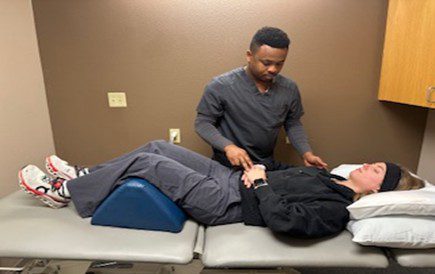
Figure 1 Diaphragmatic Nasal Breathing Technique in Supine
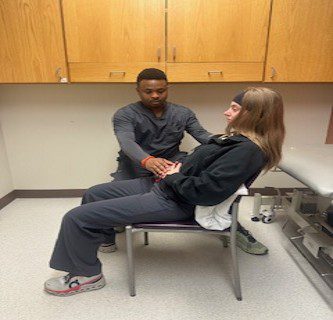
Figure 2 Diaphragmatic Nasal Breathing Technique in Slump Sitting
References
- Elena RS, Marcin C Cristina OC, Alice E, Lopez M, Carmen RM, Joanna p, Rosa EZ. Effects of a controlled diaphragmatic breathing session on perceived pain and state anxiety in people with chronic pain. Current Psychology. 2024;(43):31650-31660.
- Borsook D, Linnnman C, Fiarai V, Strassman AM, Becerra L, Elman I. Reward deficiency and anti-reward in pain chronification. Neuroscience and Biobehavioral reviews. 2016;68:282-297. doi:https://doi.org/10/1016/j.neubiorev.2016.05.033
- Gholamrezaei A, van Diest I, Aziz Q, Vlaeyen JWS, Van Oudenhove L. Influence of inspiratory threshold load on cardiovascular responses to controlled breathing at 0.1 HZ. Psychophysiology. 2019;56(11):e13447. doi:https://doi.org/10.1111/psyp.13447
- Gholamrezaei A, van Diest I, Aziz Q, Vlaeyen JWS, Van Oudenhove L. Effects of slow, deep breathing on visceral pain perception and its underlying psychophysiological mechanisms. The official Journal of the European Gastrointestinal Motility Society. 2022;34(4):e14242. doi:https://doi.org/10.1111/nmo.14242
- Woolf CJ. Central sensitization: implications for the diagnosis and treatment of pain. Pain. 2011;152(2):s2-s5.
- Nijs J, Apeldoorn A, Hallegraeff H, Clark J, Smeets R, Malfliet A. Low back pain: guidelines for the clinical classification of predominant neuropathic, nocicceptive, or central sensitization pain. Pain Physician. 2015;18:E333-46.
- Martin R, Niamh M. “I don’t know why I’ve got this pain!” Allostasis as a possible explanatory model. Physical Therapy & Rehabilitation Journal. 2022;102:1-12. doi:https://doi.org?10.1093/ptj/pzac017
- Chen T, Wang J, Wang YQ, Chu YX. Current understanding of the neural circuitry in the comorbidity of chronic pain and anxiety. Neural Plasticity. Published online 2022:4217593. doi:https://doi.org/10.1155/2022/4217593
- Benedetti F. The Neuroscience Behind the Doctor-Patient Relationship. Oxford University Press
- Gerrits MMJG, Vogelzangs N, Van Oppen P, Van Marwijk HWJ, Van der Horst H, Penninx BWJH. Impact of pain on the course of depressive and anxiety disorders. Pain. 2012;153(2):429-436. doi:https://doi.org/10.1016/j.pain.2011.11.001
- Tracy LM, Ioannou L, Baker KS, Gibson SJ, Georgiou-Karis-tianis N, Giummmarra MJ. Meta-analytic evidence for decreased heart rate variability in chronic pain implicating parasympathetic nervous system dysregulation. Pain. 2016;157(1):7-29.
- Bennarroch EE. The arterial baroreflex: Functional organization and involvement in neurologic disease. Neurology. 2008;71(21):1733-1738. doi:https://doi.org/10.1212/01.wnl.00003
- Shirley T, Neerja K, Sachib KS, Acharya B. Vagally mediated heart rate variability and mood states in patients with chronic pain receiving prolonged expiration regulated breathing: a randomized controlled trial. Applied Psychophysiology and Biofeedback. 2024;49:665-675. doi:https://doi.org/10.1007/s10484-024-09660-3
- Barnett WH, Latash EM, Capps RA, Dick TE, Wehrwein EA, Molkov YI. Traube-Hering waves are formed by interaction of respiratory sinus arrhythmia and pulse presssure modulation in healthy men. Journal of Applied Physiology. 2020;129(5):1193-1202. doi:https://doi.org/10.1152/japplphysiol.00452.2020
- Gholamrezaei A, van Diest I, Aziz Q, Vlaeyen JWS, Van Oudenhove L. Controlled breathing and pain: Respiratory rate and inspiratory loading modulate cradiovascular autonomic responses, but not pain. Psychophysiology. 2021b;58(10):e13895. doi:https://doi.org/10.1111/psyp.13895
- Chakravarthy K, Chaudhry H, Williams K, Christo PJ. Review of the use of vagal nerve stimulation in chronic pain management. Current Pain and Headache Reports. 2015;19(12):54. doi:https://doi.org/10.1007/s1191
- Bruehl S, Chung OY. Interactions between the cardiovascular and pain regulatory systems: An updated updated review of mechanisms and possible alterations in chronic pain. Neuroscience and Biobehavioral reviews. 28(4):395-414. doi:https://doi.org/10.1016/j.neubiorev.2004.06.004
- Van Diest I, Verstappen K, Aubert AE, Widjaja D, Vansteen-wegen D, Vlemincx E. Inhalation/expiration ratio modulates the effect of slow breathing on heart rate variability and relaxation. Applied Psychophysiology and Biofeedback. 2014;39(3-4):171-180. doi:https://doi.org/10.1007/s10484-014-9253-x
- Levin SJ, Swap SJ. The Impact of deep breathing and alternate nostril breathing on heart rate variability: a human physiology laboratory. Advances in Physiology Education. 2019;43(3):270-276.